PEX vs. Copper Repiping: Which Is Right for Your San Diego Home?
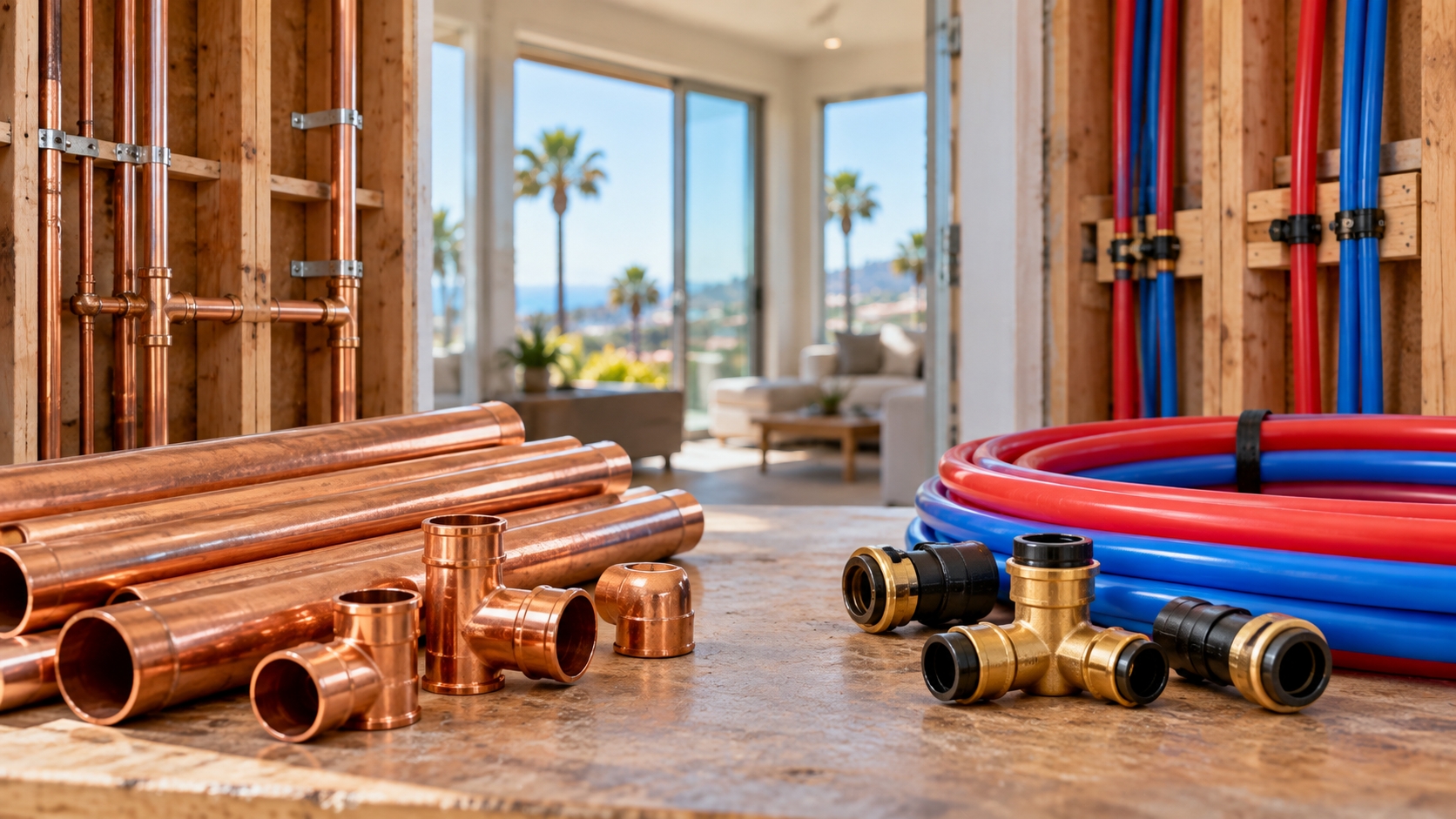
When comparing PEX vs. copper, PEX costs less and installs faster, while copper costs more but typically lasts longer (50 to 70 years versus 25 to 50) and handles heat and sun better. Both are approved under California's plumbing code, so the right choice for your San Diego home depends on budget, layout, and plans.
If you are planning to repipe a home in San Diego or North County, the choice between PEX and copper is one of the first decisions you will make. Here is how the two materials compare on the factors that matter most.
What Is PEX Pipe?
PEX, short for cross-linked polyethylene, is a flexible plastic tubing used for hot and cold water supply lines.
Pros of PEX
According to the U.S. Department of Housing and Urban Development's PEX design guide, PEX offers several practical advantages:
Flexibility: It bends around obstructions and can run long distances without fittings. Fewer connections mean faster installation and less potential for leaks at fittings.
Freeze resistance: If water inside PEX freezes, the pipe can expand without cracking.
Corrosion resistance: In testing, PEX did not pit or corrode, and it resists mineral buildup.
Quieter operation: The pipe's flexibility absorbs pressure surges, which can reduce or eliminate water hammer.
Faster installation: Installation time and labor are significantly reduced compared with rigid metal pipe.
Cons of PEX
PEX does have limitations. It should not be installed outdoors unless it is buried or properly protected from UV exposure, since sunlight degrades it. Some codes also restrict PEX within the first 18 inches of piping connected to a water heater, so a different material may be required at that connection.
What Is Copper Pipe?
Copper is a rigid metal pipe used for residential water supply lines. It is joined with fittings, typically by soldering.
Pros of Copper
The Copper Development Association highlights these advantages:
Corrosion and scaling resistance: Copper offers excellent resistance to both.
Heat resistance: It handles high temperatures well.
UV resistance: Copper does not degrade in sunlight, so it can be used in exposed locations.
Fire safety: Copper will not burn, support combustion, or give off toxic gases, and it will not carry fire through floors.
Recyclability: Copper is 100% recyclable without losing its properties.
Cons of Copper
The main drawbacks are cost and installation. Copper material costs more per foot than PEX, and installation is more labor intensive.
PEX vs. Copper Cost
PEX is the less expensive option. According to Angi, PEX typically costs about $0.50 to $2 per linear foot, while copper runs about $2 to $8 per linear foot. Homeowners can also expect to pay 20% to 40% more to install copper than PEX, mostly because of the added installation complexity.
These are national figures. Labor rates vary by location, so repiping costs in San Diego may run higher than national averages. Total cost also depends on the size of the home, the number of fixtures, and how accessible the existing pipes are. For a broader look at what drives the total price of a project, see our guide to the cost to repipe a house in San Diego County.
PEX vs. Copper Lifespan
Copper generally lasts longer. Angi estimates copper pipe lasts 50 to 70 years, while PEX lasts 25 to 50 years, giving copper roughly 20 to 30 more years of service life. Actual lifespan for either material depends on installation quality, water conditions, and exposure. For PEX in particular, keeping it protected from sunlight is important to its long-term performance.
How Do PEX and Copper Handle San Diego's Hard Water?
San Diego's hard water can leave mineral scale inside pipes and fixtures over time, which we cover in detail in our post on how hard water affects your plumbing. Both materials are described by their industry sources as resistant to it. HUD's guide notes that PEX resists mineral buildup, and the Copper Development Association describes copper as highly resistant to scaling. Hard water on its own is not a strong reason to choose one material over the other.
Is PEX Allowed in California?
Yes. PEX has been approved for use statewide in California since 2010, including in homes. The path to approval was not simple. According to Contractor Magazine, the California Building Standards Commission adopted PEX into the California Plumbing Code in 2009. A lawsuit forced the commission to repeal it in the summer of 2010, and after further environmental review, PEX was reapproved in August 2010. The reapproval came with conditions, including UV protection requirements and mandatory flushing procedures. If you have heard that PEX is not allowed in California, that information is outdated.
Which Is Right for Your Home?
There is no single right answer. The better choice depends on a few practical factors.
Budget
If keeping upfront cost down is the priority, PEX is typically the more affordable option for both materials and labor.
How Long You Plan to Stay
If you plan to stay in your home for decades, a copper repipe's longer expected lifespan may be worth the higher upfront cost. If you expect to move in a shorter time frame, PEX's lower cost may make more sense.
Your Home's Layout and Access
PEX's flexibility allows it to be routed through walls and around obstacles with fewer fittings, which can mean less wall opening during a repipe. Homes with tight or hard-to-reach spaces can benefit from that flexibility. A professional repiping assessment looks at how your existing pipes are routed and what access is available before a material is chosen.
Heat and Sun Exposure
Any pipe that will be exposed to sunlight, such as exterior runs, is better suited to copper unless PEX can be properly protected. The connection at the water heater may also need metal pipe depending on code.
Frequently Asked Questions
Is PEX better than copper?
Neither is better in every situation. PEX costs less, installs faster, and resists freezing and corrosion. Copper lasts longer and handles heat and UV exposure better. The right choice depends on your budget, home layout, and how long you plan to stay.
Which is cheaper, PEX or copper?
PEX. It typically costs about $0.50 to $2 per linear foot compared with $2 to $8 for copper, and installation labor for copper runs about 20% to 40% higher, based on national averages.
How long does PEX last compared to copper?
PEX typically lasts 25 to 50 years, while copper lasts 50 to 70 years. Installation quality and protection from sunlight affect the lifespan of both.
Can you repipe a house with PEX in California?
Yes. PEX has been approved for residential use statewide under the California Plumbing Code since 2010.
The Bottom Line
PEX and copper are both reliable, code-approved choices for repiping a home in San Diego or North County. PEX offers lower cost, faster installation, and flexibility, while copper offers a longer lifespan and better resistance to heat and sunlight. Weigh your budget, your home's layout, and how long you plan to stay, and choose the material that fits your situation rather than a one-size-fits-all answer.