A slow bathroom sink is an annoyance. A problem that starts showing up in drains all over the house is something else. When the main sewer line clogs, every fixture in your home is affected, and if it isn't caught early, wastewater has only one place to go: back up into the house. With the rainy season starting in San Diego and North County, it's a good time to know what the early warning signs look like.
How a Main Line Clog Is Different From a Regular Clog
Every sink, tub, shower, toilet, and appliance in your home drains into a single main sewer line that carries wastewater out to the city sewer. When one fixture is clogged, the blockage is usually in that fixture's own drain, and the rest of the house works normally. A main sewer line clog is different because it sits downstream of everything. Water from every drain is trying to get through the same blocked pipe.
That's why the pattern matters more than any single symptom. As Angi puts it, one slow drain is often just hair, but slowness across multiple fixtures points to the main line.
Warning Signs of a Main Sewer Line Clog
These are the signs to watch for, especially when more than one shows up at the same time.
Several Drains Slow Down at Once
If the kitchen sink, the shower, and a bathroom sink all start draining slowly around the same time, the problem is probably not in any one of them. Clearing each drain individually won't fix it, because the restriction is further down the line where they all meet.
Gurgling Toilets and Drains
A gurgling toilet or a gurgling drain after water goes down is one of the earliest signs. When the main line is partly blocked, water can't flow out smoothly, and air gets forced back up through the pipes and fixtures. You might hear it from a toilet when a nearby sink drains, or from a tub after a shower.
Water Backing Up Where It Shouldn't
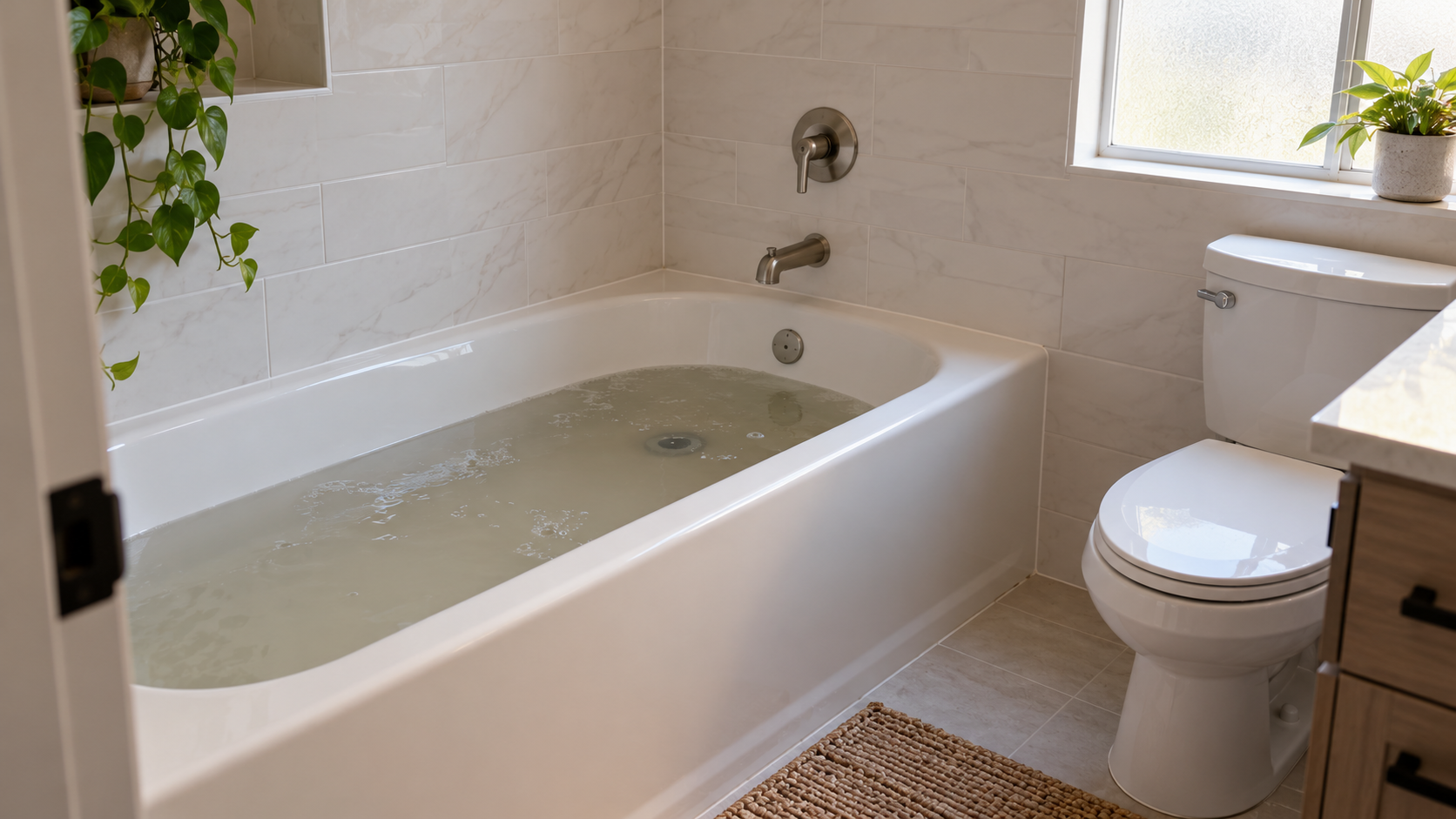
A clearer sign is water coming up where it shouldn't. Water may rise in a toilet or sink when another fixture is used. This Old House points to a specific pattern worth knowing: water backing up into a shower or tub when the washing machine drains. A washing machine sends a large volume of water into the system at once, and if the main line can't carry it away, it can come back up through another drain.
A Sewer Smell in the House
A sewer smell in the house, coming from sinks, tubs, or floor drains, can mean wastewater isn't moving out the way it should. A smell alone has other possible causes, but combined with slow or gurgling drains, it points to a problem in the main line.
Wet Spots or Unusually Green Grass in the Yard
Some signs show up outside. Standing water or soggy ground near where the sewer line runs can mean wastewater is leaking from the pipe. Angi notes that a patch of unusually lush grass can be a clue too, since leaking wastewater acts like fertilizer.
What Causes a Main Sewer Line to Clog
Most main line clogs come from a short list of causes. Grease is one of the biggest. Poured down a kitchen sink, it cools and sticks to the inside of the pipe, catching other debris over time. Flushed items are another. Wipes, paper towels, and other things that don't break down the way toilet paper does can snag in the line and build into a blockage.
Tree roots are another common cause. Roots grow toward moisture and can find their way into small cracks in the pipe, a problem we cover in more detail in our post on what to do when tree roots clog your sewer line.
The condition of the pipe itself matters too. This Old House lists aging, deteriorating, or collapsing pipe, cracks from ground movement, and sagging sections that trap water and debris as common causes of backups. It also notes that heavy rain can overload sewer systems, which is one reason problems that have been building quietly can surface during the rainy season.
What to Do If You Suspect a Main Line Clog
If you're seeing several of these signs at once, the first step is to stop using water. Every flush, shower, or load of laundry adds more water to a line that can't drain it, which raises the risk of a backup inside the house. This Old House also recommends keeping people and pets away from any area where sewage has backed up.
If wastewater does overflow outside, the City of San Diego advises turning off the water immediately and containing the flow so it doesn't reach a storm drain. The City also makes clear that property owners are responsible for the sewer line on their side of the property line. The City will only make repairs in the public right-of-way after a licensed plumber provides proof that the problem is there.
That's why the next step is finding out where the clog actually is and what's causing it. A sewer camera inspection can show whether the problem is roots, grease, damaged pipe, or something else, and whether it's on your side of the line. From there, a plumber who handles drain and sewer services can explain whether the line needs cleaning or repair.
Catching a main sewer line clog early, while it's still a gurgle or a slow drain instead of a backup, gives you more options and a much smaller mess.