The sewer line under your yard is one of the most important parts of your plumbing system, and one of the hardest to check. You can't see it, and most homeowners don't think about it until a drain backs up. A sewer camera inspection changes that by putting a camera inside the line and recording what's actually there. If you're in San Diego or North County and someone has recommended one, here's what the process involves and how to make sense of the results.
What Is a Sewer Camera Inspection?
A sewer camera inspection is a video inspection of the pipe that carries wastewater from your home to the city sewer main. You may also hear it called a sewer scope, a sewer line inspection, or a video pipe inspection. They all describe the same thing: a camera travels through the line and records its condition from the inside.
Who performs it matters. According to Angi, sewer inspections are typically done by a licensed plumber or a company that specializes in video pipe inspection. Some home inspectors offer a sewer scope as an add-on during a home purchase, but they don't repair sewer lines, so if they find a problem, they will likely refer you to a plumber. Having a plumber do the inspection means the person reviewing the footage with you can also explain what it would take to fix what they see.
When Is a Sewer Camera Inspection Worth It?
The most common reason is a drain problem that keeps coming back. If the same clog returns after it has been cleared, the cause may be inside the line itself, such as roots, a damaged section, or buildup, and a camera shows which one instead of leaving it to guesswork. Angi also notes that regular inspections are especially valuable for older homes and properties with large trees nearby, and that they're useful during a real estate transaction, when a buyer wants to know the condition of the line before closing.
For homeowners in the City of San Diego, there's another reason to know what's going on underground. According to the City of San Diego, the sewer lateral, the pipe connecting your home's drains and toilets to the City main, is private property, and maintaining it is the owner's responsibility. The City names roots, cooking grease, and debris as the biggest threats to these lines, and notes that older clay, concrete, and cast iron laterals are prone to root intrusion and deterioration. For older laterals, it recommends regular inspection and more frequent cleaning. If roots are already a concern on your property, our post on what to do when tree roots clog your sewer line goes deeper on that problem.
What Happens During the Inspection
Finding an Access Point
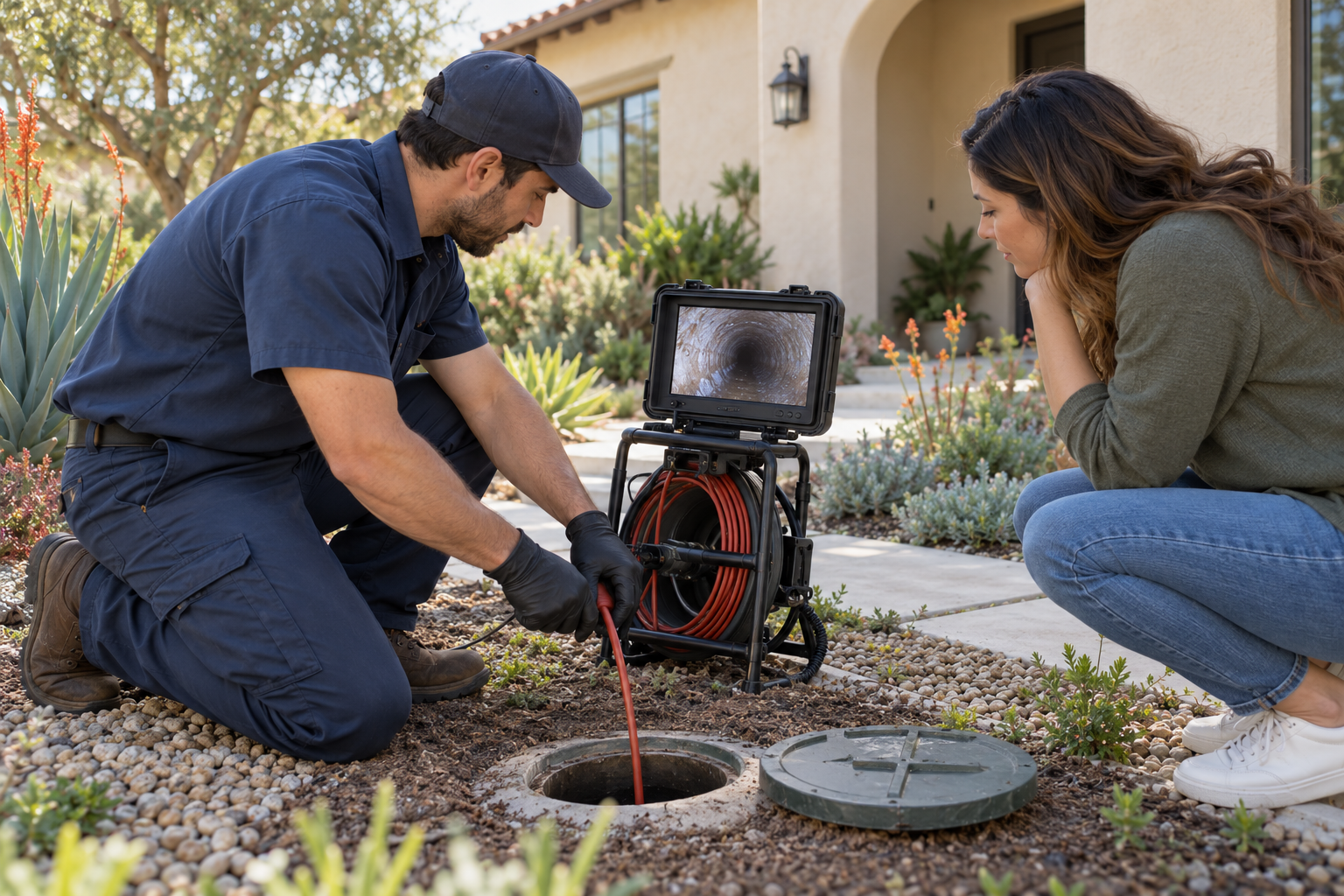
The camera needs a way into the line. Usually that's a sewer cleanout, a capped pipe that provides direct access to the sewer line. The InterNACHI Sewer Scope Inspection Standards of Practice also allow access through a roof vent stack. If there's no accessible cleanout, that gets noted in the report.
Running the Camera
Once the camera is in, it's fed through the line while it records. Angi describes the camera navigating through bends, joints, and transitions in the pipe, with the full run captured on video. The whole inspection typically takes about 30 minutes to an hour.
Reviewing the Video and Report
When the inspection is done, you should receive the recorded video along with a report of what was found and recommended next steps. Keep that footage. It's a record of your line's condition on that date, and it's useful if you're buying or selling a home or comparing repair options later.
What a Sewer Camera Can Find, and What It Means
Roots and Blockages
Roots are one of the most common findings. They enter through cracks and loose joints, drawn by the water inside, and grow over time until they catch debris and restrict flow. Blockages from grease, wipes, or other debris show up the same way, as material narrowing or closing off the pipe. Either one explains why a drain keeps slowing down.
Cracks, Breaks, and Shifted Pipe
The camera also reveals structural damage. A crack can let roots in and wastewater out. A break, separation, or collapsed section is more serious because it can stop flow entirely. An offset, where two sections of pipe have shifted out of alignment, creates a ledge that catches waste and debris. Under the InterNACHI standards, offsets larger than 1/4 inch are reported, as is standing water deeper than 1 inch, which can point to a low spot in the line where waste settles instead of flowing out.
Buildup and Pipe Material
Over time, the inside of a pipe can collect scale, rust, or grease that narrows it. When possible, the inspection also identifies what the pipe is made of. That matters because different materials age differently, and knowing what you have helps explain what you're seeing. If your line turns out to be cast iron, our post on why cast iron pipes fail in San Diego homes covers what to expect from that material.
What a Camera Inspection Can't Tell You
A camera inspection gives you a direct look inside a sewer line without digging, but it has limits. The InterNACHI standards describe a sewer scope as not technically exhaustive. It shows visible conditions on the day of the inspection, so it won't catch defects that are concealed, and it can't predict how the line will hold up in the future. The video shows the problem, but it doesn't come with a repair price on its own. That part comes from talking through the findings.
What Comes Next
What happens after the inspection depends entirely on what the camera found. A line in good condition may need nothing at all. Roots or buildup often point toward cleaning, while cracks, breaks, or shifted sections may call for repair. Talking through the footage with someone who provides drain and sewer services helps you understand which of those applies to your line and how urgent it is.
It also helps to know where the City's role ends. The City of San Diego responds to blockages and breaks in the portion of the lateral under the street, but it does not work on the section on private property. If the problem is on your side of the property line, arranging the repair is up to you, which is exactly why seeing the problem first makes such a difference.