Does Homeowners Insurance Cover Plumbing Repairs in San Diego?
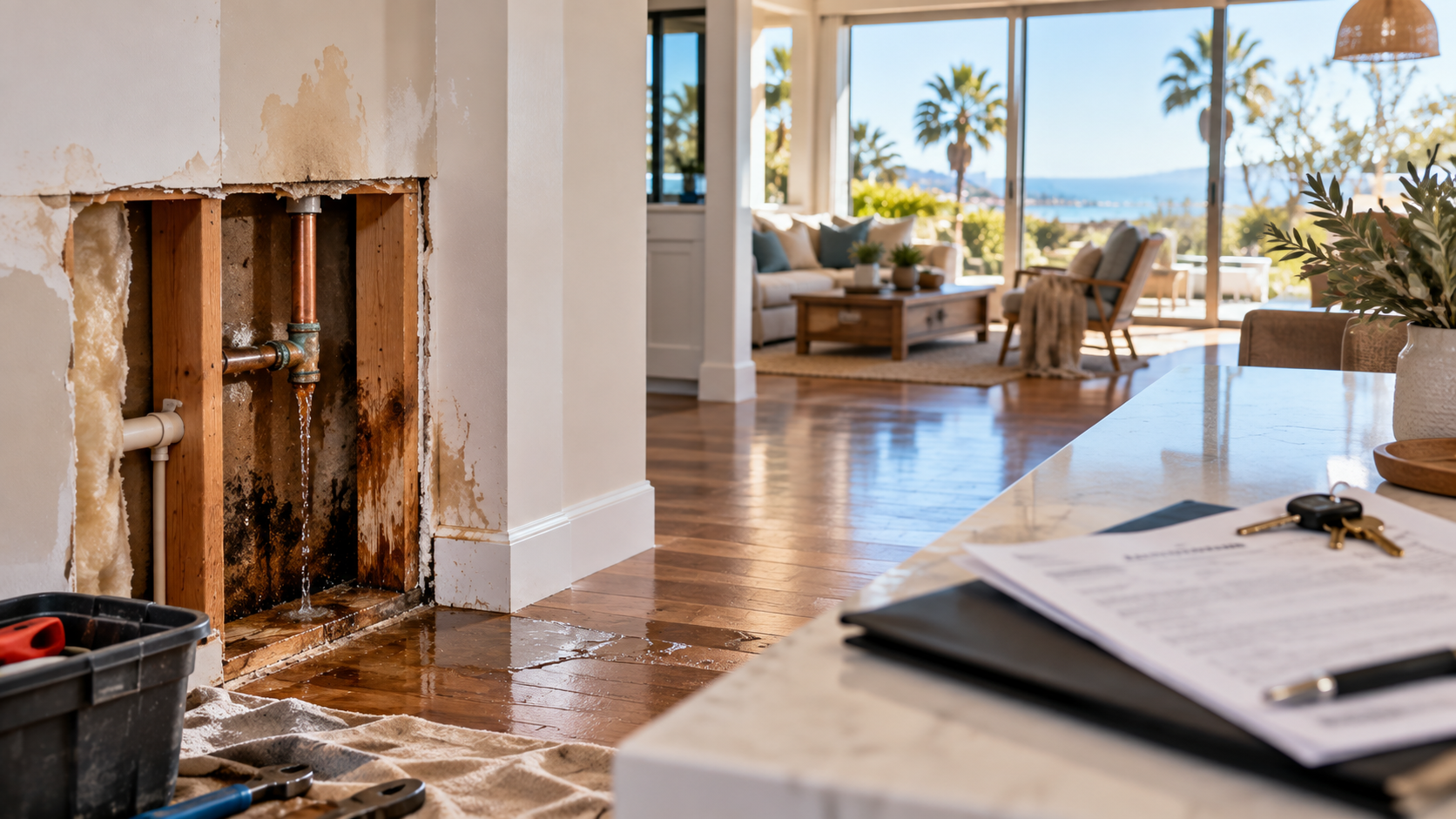
For San Diego homeowners, insurance usually covers water damage caused by a sudden, accidental plumbing failure, such as a burst pipe or a ruptured supply line. It usually does not pay for the plumbing repairs themselves, damage from slow leaks, or flooding. Sewer backup typically requires added coverage. Your specific policy language always decides.
Water damage is one of the most common reasons homeowners file claims. According to the Insurance Information Institute, water damage and freezing accounted for 22.6% of homeowners insurance claims in 2023, with an average claim of about $15,400 between 2019 and 2023. Knowing how coverage works before something goes wrong makes it much easier for North County San Diego homeowners to handle a claim when it does.
What Does Homeowners Insurance Cover for Plumbing Damage?
Sudden and Accidental Water Damage
Most standard homeowners policies are built around the idea of "sudden and accidental" damage. If a pipe bursts, a washing machine hose splits, or a water heater tank ruptures without warning, the resulting water damage is generally covered. That can include drywall, flooring, cabinets, ceilings, and personal belongings.
Why the Damage Is Covered but the Pipe Often Isn't
This is the part that surprises many homeowners. Many policies pay to repair what the water damaged but not the pipe, fitting, or appliance that failed. Your new floor may be covered while the cost of replacing the broken pipe or an old water heater is not.
What Plumbing Repairs Aren't Covered?
Gradual Leaks and Wear and Tear
Damage that develops over time is usually treated as a maintenance issue rather than an accident. A slow drip under a sink, a toilet leaking at the base, or a pipe that corroded for years before failing often falls outside coverage. Many policies specifically exclude continuous or repeated leakage.
Flooding and Groundwater
Standard homeowners policies do not cover flood damage. Water that enters from outside, such as rising surface water or groundwater seeping through a foundation, requires a separate flood insurance policy.
Does Homeowners Insurance Cover Slab Leaks?
Sometimes. If a slab leak causes sudden water damage, that damage may be covered, but many policies exclude the cost of repairing the pipe itself and damage from a leak that continued over time. Coverage for breaking through the slab to reach the pipe varies by policy.
Why Slab Leaks Fall Into a Gray Area
A slab leak is a leak in a water line running beneath a home's concrete foundation. These leaks often go unnoticed for some time before signs appear, such as warm spots on the floor, an unexplained jump in the water bill, or the sound of running water when nothing is on. Because of that, insurers may question whether the damage was sudden or gradual.
Finding the exact location matters. Professional leak detection uses specialized equipment to pinpoint a leak under the slab, which limits how much flooring and concrete has to be opened to reach it.
Questions to Ask Your Insurer
Coverage for slab leaks varies widely between policies. Before a problem happens, it is worth asking your agent:
Does my policy cover the cost of accessing the pipe, such as breaking through the slab or removing flooring?
How does my policy define continuous or repeated leakage?
Is resulting damage covered even if the pipe repair is not?
What is my deductible for water damage claims?
Is Sewer Backup Covered by Homeowners Insurance?
Usually not by a standard policy. Damage from a sewer backup typically requires a separate endorsement, and repairing the sewer line itself is generally the homeowner's responsibility.
Who Owns the Sewer Lateral
The sewer lateral is the pipe that carries wastewater from your house to the city sewer main. According to the Insurance Information Institute, homeowners are responsible for maintaining and repairing their lateral, including any part that extends into the street or public right of way.
Sewer Backup Coverage Is Usually an Add-On
Damage from sewage backing up through drains, toilets, or tubs is generally not included in a standard homeowners policy. The Insurance Information Institute notes that backup coverage is available from most insurers for a nominal cost, typically as an endorsement added to your policy. If you are not sure whether you have it, check your declarations page or ask your agent.
What Damages Sewer Laterals
Tree and shrub roots can work their way into small cracks and pipe joints, then grow and cause blockages or breaks. Aging, cracked, or deteriorated laterals can also let groundwater into the line. The most reliable way to see the condition of a lateral is a video camera inspection, which is commonly done as part of professional drain services.
What Should You Do After Plumbing Water Damage?
Stop the Water and Prevent Further Damage
Shut off the water at the fixture or the main valve as soon as you can. The California Department of Insurance advises that policies may not cover additional damage if you did not take reasonable steps to protect your property. Insurers generally reimburse reasonable costs for temporary repairs, so save every receipt.
Document the Damage and the Source
Take photos and video of each affected room and of the source of the leak. List damaged items, including brand names and model numbers for appliances and electronics. Do not throw away damaged items until your adjuster says you can.
Hold Off on Permanent Repairs
Temporary measures to stop the damage are expected. Extensive permanent repairs should wait until the claims adjuster has inspected the damage, so the scope of the loss is clear to everyone.
How Can You Protect Your Insurance Claim?
Keep a Paper Trail
Log every phone call and conversation with your insurance company, including dates and names, and keep copies of all correspondence. The consumer advocacy group United Policyholders recommends staying proactive throughout the claim and keeping good notes from the start.
What to Do If Your Claim Is Denied in California
For San Diego homeowners, California's Fair Claims Settlement Practices Regulations offer specific protections. A claim denial must be in writing and must explain the reasons. It must also tell you that you can ask the California Department of Insurance to review it if you believe the claim was wrongly denied. You can reach the Department's consumer hotline at 1-800-927-4357. Be cautious about early settlement offers presented as final. If more damage is discovered later, you can usually reopen the claim.
Key Insurance Terms to Know
Sudden and accidental: Damage from an unexpected event, like a burst pipe. This is the type of water damage most policies cover.
Continuous or repeated leakage: Damage from a leak that went on over time. This is commonly excluded.
Endorsement: An add-on to your policy that changes or expands coverage, such as sewer backup coverage.
Deductible: The portion of a covered loss you pay before insurance pays the rest.
Proof of loss: A formal statement you submit to your insurer describing the damage and what you are claiming.
Replacement cost vs. actual cash value: Replacement cost pays to replace damaged items with new ones of similar quality. Actual cash value subtracts depreciation, so older items are paid at a lower amount.
How Can You Lower Your Risk of Water Damage?
Because gradual leaks are often excluded, catching small problems early is the best protection. Know where your main water shutoff valve is and make sure it turns easily. Check under sinks, around toilets, and near your water heater for moisture or stains. Watch your water bill for unexplained increases.
Smart water shutoff devices can detect unusual flow and turn off the water automatically, which can keep a small leak from becoming a large claim. Some insurers even offer premium discounts for homes with a smart water shutoff installed.
Frequently Asked Questions
Does homeowners insurance cover burst pipes?
Usually, yes. A pipe that bursts suddenly is the classic example of sudden and accidental damage, so the resulting water damage is generally covered. The cost of repairing the pipe itself may not be.
Does homeowners insurance cover a water heater?
It depends on how the water heater failed. Water damage from a sudden tank rupture is typically covered. Replacing a water heater that simply wore out with age is usually considered maintenance and is not covered.
Does homeowners insurance cover sewer line repair?
Generally no. Homeowners are responsible for maintaining and repairing their sewer lateral. Damage from sewage backing up into the home is usually covered only if you have a sewer backup endorsement.
Does homeowners insurance cover slab leak repair?
Coverage varies. Some policies cover resulting water damage and the cost of accessing the pipe, while the pipe repair itself and damage from long-term leakage are often excluded. Ask your agent how your policy handles slab leaks before one happens.
The Bottom Line
Homeowners insurance is designed for sudden plumbing accidents, not long-term wear. Burst pipes and ruptured supply lines are usually covered, while slow leaks, flooding, and the failed pipe itself often are not. Slab leaks depend heavily on your policy, and sewer backup usually requires an endorsement. Whether you live in San Diego or anywhere in North County, review your policy now, ask your agent about the gaps, and act quickly to stop and document damage if it happens.