Water Heater Strapping Requirements in California: What San Diego Homeowners Need to Know
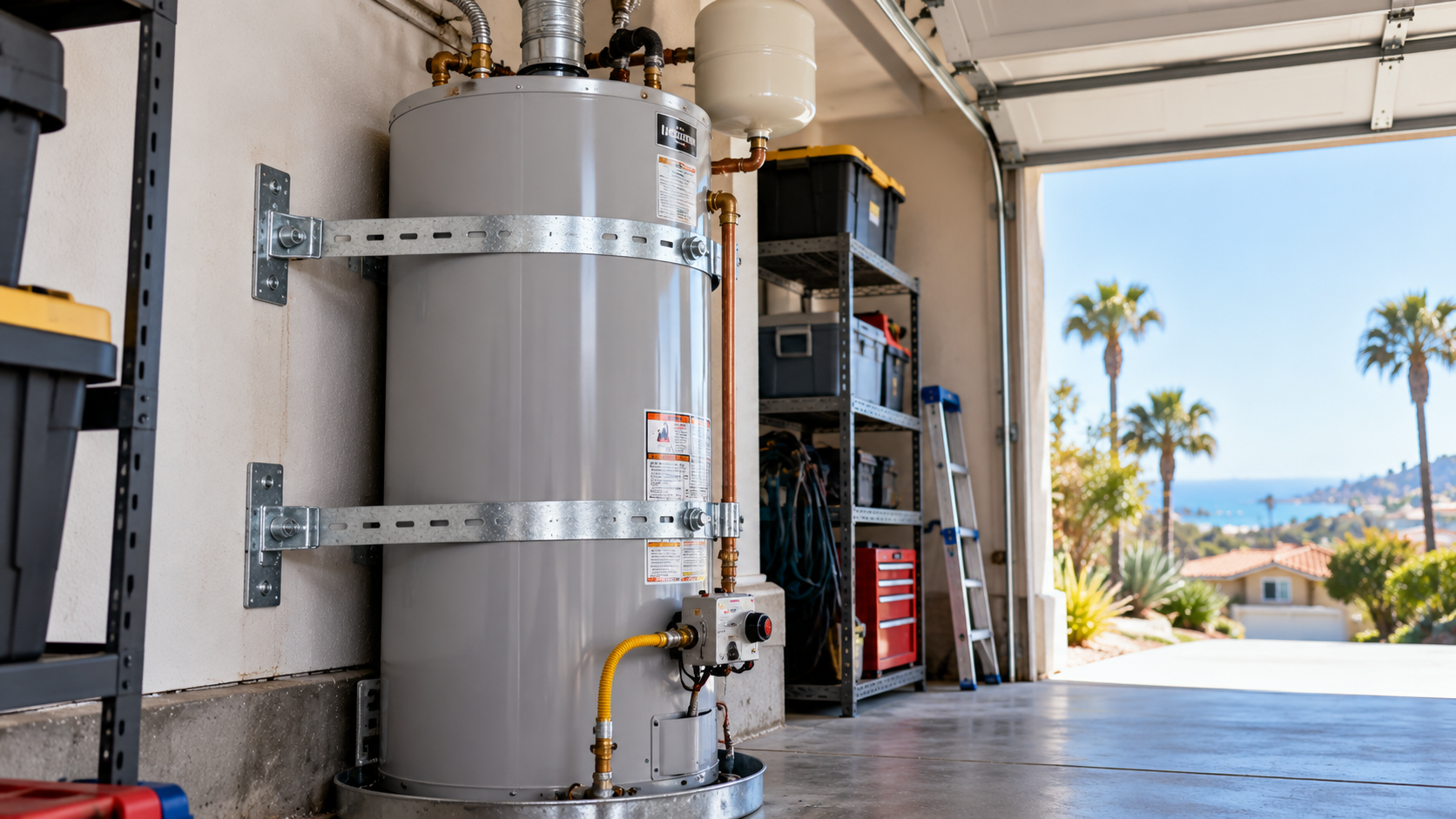
California law requires all residential water heaters, whether new, replacement, or existing, to be braced, anchored, or strapped to resist earthquake motion. Installation must follow the California Plumbing Code, and home sellers must certify compliance to buyers. For San Diego homeowners, strapping is both a legal requirement and a basic earthquake safety step.
Whether you are replacing an old unit, getting ready to sell, or simply checking your garage, here is what the water heater strapping requirements mean for homes across San Diego and North County.
Are Water Heater Straps Required in California?
Yes. Every residential water heater in California must be secured against earthquake movement, and the requirement comes from state law, not just local building practice.
What the Law Says
California Health and Safety Code Section 19211 states that water heaters "shall be braced, anchored, or strapped to resist falling or horizontal displacement due to earthquake motion." The law also sets the standard for how it must be done: water heaters must be secured in accordance with the California Plumbing Code, or any modifications a city or county has made to it. That means the water heater strapping code in your area can include local requirements on top of the state baseline.
Which Water Heaters the Requirement Covers
The law is broad. It applies to all new water heaters, all replacement water heaters, and all existing residential water heaters. There is no exemption for older homes or for a unit that has been in place for years without bracing. If a residential water heater is not strapped, it does not meet state requirements.
Why Water Heater Strapping Matters in an Earthquake
A standard tank water heater is tall, heavy when full, and connected to both water and gas or electrical lines. During strong shaking, an unsecured tank can tip over or slide away from the wall.
According to the Earthquake Country Alliance, water heaters can topple during earthquakes, causing gas and water leaks and even fires. A falling tank can break its connections, flood the surrounding area, and in homes with gas water heaters, create a serious fire risk. Proper bracing keeps the tank upright and in place so those connections stay intact.
What Are Water Heater Seismic Straps?
Water heater seismic straps are metal straps that secure a water heater to the wall so it cannot tip over or shift during an earthquake. They are a standard way to meet California's water heater strapping requirements.
How Seismic Straps Work
Water heater seismic straps are metal straps that wrap around the tank and fasten to the wall framing behind it. Once installed, they hold the tank against the wall so it cannot tip forward, fall sideways, or shift enough to pull on its gas and water lines. Combined with keeping the tank close to the wall, they limit movement in every direction.
Pre-Approved Kits vs. Generic Materials
The California Seismic Safety Commission notes that the simplest approach for most homeowners is a pre-approved bracing kit, which is sold at hardware stores. These kits include the straps and fasteners designed for the job. Homeowners who choose to use generic parts instead are directed to detailed instructions from the Earthquake Country Alliance.
How to Strap a Water Heater
The Earthquake Country Alliance outlines the basic steps for securing a water heater. These steps describe what proper bracing involves, whether you do it yourself or have it done.
Check for Flexible Gas and Water Connectors
Before strapping, make sure the gas and water lines connected to the tank use flexible connectors. Rigid connections can break if the tank shifts, while flexible connectors allow some movement without rupturing.
Keep the Tank Close to the Wall
The tank should sit within about 2 inches of the wall to keep it from tipping backward. If there is a larger gap, a wooden block attached to the wall studs can fill the space so the straps pull the tank against solid backing.
Anchor the Straps Into Studs or Concrete
The metal straps wrap around the tank and connect to the wall. Each strap should be fastened into wall studs, or into the wooden block, using the screws provided in the kit. If the tank sits against a concrete wall, the Earthquake Country Alliance recommends 1/4 inch expansion bolts.
When a Licensed Plumber Should Handle It
Strapping itself is straightforward, but related work may not be. If the gas or water connectors need to be replaced with flexible lines, or if you are unsure what your city or county requires beyond the state baseline, that work is best handled by a licensed professional. The same applies any time a water heater is installed or replaced, since the new unit must be secured to code as part of any water heater installation or replacement.
Water Heater Strapping Requirements When Selling a Home
When you sell a home in California, you must certify in writing to the buyer that the water heater is braced, anchored, or strapped. Sellers of homes built before 1960 must also provide the Homeowner's Guide to Earthquake Safety.
The Seller Certification Requirement
If you are selling a home in California, strapping is part of the transaction. According to the California Seismic Safety Commission, home sellers must certify to buyers that the water heater is braced. Under Section 19211, this certification is made in writing and can be included in standard transaction documents, such as the transfer disclosure statement.
Homes Built Before 1960
Sellers of older homes have an additional obligation. The Seismic Safety Commission notes that if a house was built before 1960, the seller must provide the buyer with the Homeowner's Guide to Earthquake Safety. Sellers should confirm the build year early in the process.
What Buyers Should Know
If you are buying a home, look for the seller's written certification in your disclosure documents, and check the water heater yourself during your walkthrough. A properly secured tank should have metal straps fastened to the wall and should sit close to the wall behind it.
Does a New Water Heater Need to Be Strapped?
Yes. Section 19211 specifically includes new and replacement water heaters, so any unit installed today must be braced, anchored, or strapped to meet the requirement. If you are deciding whether to fix an aging unit or replace it, our guide on whether to repair or replace your water heater walks through the signs to watch for. When budgeting for a new unit, keep in mind that proper securing is part of a code-compliant installation. For a breakdown of typical pricing, see how much a new water heater costs in San Diego County.
Frequently Asked Questions
How do I install water heater straps?
Confirm the gas and water lines use flexible connectors, make sure the tank sits within about 2 inches of the wall, then wrap the metal straps around the tank and fasten them into wall studs or a wooden block attached to the studs. On concrete walls, use 1/4 inch expansion bolts.
Do I have to strap an existing water heater?
Yes. The law applies to existing residential water heaters, not only new installations. If your current water heater is not secured, it does not meet state requirements.
Can I strap my own water heater?
Many homeowners can. The California Seismic Safety Commission points to pre-approved bracing kits sold at hardware stores as the simplest option. Work involving gas connections or replacing rigid lines with flexible connectors is best left to a licensed professional.
Who is responsible for water heater strapping when selling a home?
The seller. California requires sellers to certify in writing to buyers that the water heater is braced, anchored, or strapped.
The Bottom Line
Water heater strapping requirements in California apply to every residential water heater, whether it was installed last week or decades ago. The law requires bracing that follows the California Plumbing Code, and sellers must certify compliance when a home changes hands. For homeowners in San Diego and North County, checking your water heater takes only a few minutes: confirm that it has metal straps anchored to the wall, sits close to the wall, and uses flexible gas and water connectors.