Is Your San Diego Home's Water Pressure Too High? Why It Matters
Strong water pressure feels like a good thing. A shower that actually rinses, a hose that blasts the driveway clean, faucets that fill a pot fast. But there is a point where good pressure turns into an expensive problem. When the water pushing through your pipes is too strong, it wears down your plumbing from the inside, and most homeowners never notice until something fails.
With summer here and irrigation systems and garden hoses running daily, your plumbing is working harder than it does the rest of the year. That makes early summer a smart time to find out whether your pressure is helping you or quietly costing you.
What Counts as "Normal" Water Pressure?
Water pressure is measured in pounds per square inch, or psi. For most homes, a healthy range sits between 40 and 80 psi, with around 60 psi being the sweet spot. That gives you good flow at every fixture without straining the system.
The ceiling matters most. According to the U.S. Department of Energy's Building America Solution Center, most plumbing codes require a pressure reducing valve on any home where incoming water exceeds 80 psi, because higher pressures can rupture pipes and damage fixtures. Keeping pressure at or below roughly 60 psi reduces the likelihood of leaking pipes, leaking water heaters, and dripping faucets. In other words, 80 psi is not a target to aim for. It is a line you do not want to cross.
Why San Diego Homes Are Prone to High Pressure
You do not control the pressure coming into your home. Your municipal supplier sets it to serve an entire area, and that level has to be high enough to reach homes at the top of a hill or the far end of the line. San Diego County is full of elevation changes, from coastal flats to inland slopes and canyon neighborhoods, so the pressure leaving the main can run well above what any single house needs.
If your home sits at a lower elevation within its pressure zone, you can receive far more force than the house was designed to handle. That is why two homes a few miles apart can have very different readings, and why high pressure often goes unnoticed. It rarely announces itself. It just works in the background, shortening the life of everything it touches.
The Damage High Pressure Quietly Causes
The trouble with high pressure is that the damage builds slowly. There is no dramatic moment, just steady wear that adds up to early failures and bigger repair bills.
Stress on Pipes and Joints
Every time you shut off a faucet, water racing through the pipe has to stop fast. At normal pressure your plumbing absorbs that. At high pressure it creates a shock called water hammer, the banging sound you sometimes hear in the walls. Over time that repeated stress loosens joints and weakens the pipe itself. In homes built on slab foundations, common across San Diego, a weakened line under the concrete can develop into a slab leak that is costly to find and repair. Our guide to slab leak detection in San Diego County homes covers the warning signs.
Water Heater Strain
Your water heater is one of the most expensive fixtures in the house, and constant high pressure is hard on it. The tank and its connections are built for a normal range. Push past that day after day and you accelerate wear on the tank, the valves, and the temperature and pressure relief valve that is supposed to be your last line of safety. Homeowners who replace water heaters far sooner than expected are often dealing with a pressure problem they never diagnosed. If yours is showing its age, our water heater services team can check whether pressure is the real culprit.
Fixtures, Appliances, and Wasted Water
High pressure also wears out faucet cartridges, runs toilet fill valves ragged, and stresses the inlet valves on dishwashers and washing machines. It pushes more water through every fixture than you need, so you pay for gallons you never meant to use. Those constant drips add up to real money on your monthly bill, on top of the repairs they eventually cause.
Warning Signs Your Pressure Is Too High
Your home will usually tell you something is off before a pipe gives out. Watch for these signs:
Banging or knocking sounds in the walls when you shut off water
Faucets that drip or toilets that run long after you would expect
Appliances and fixtures that fail earlier than they should
A water heater that wears out well ahead of its expected lifespan
Water bills creeping up without a clear change in how much you use
Any one of these can have another cause, but together they point toward pressure running too high.
How to Check Your Water Pressure
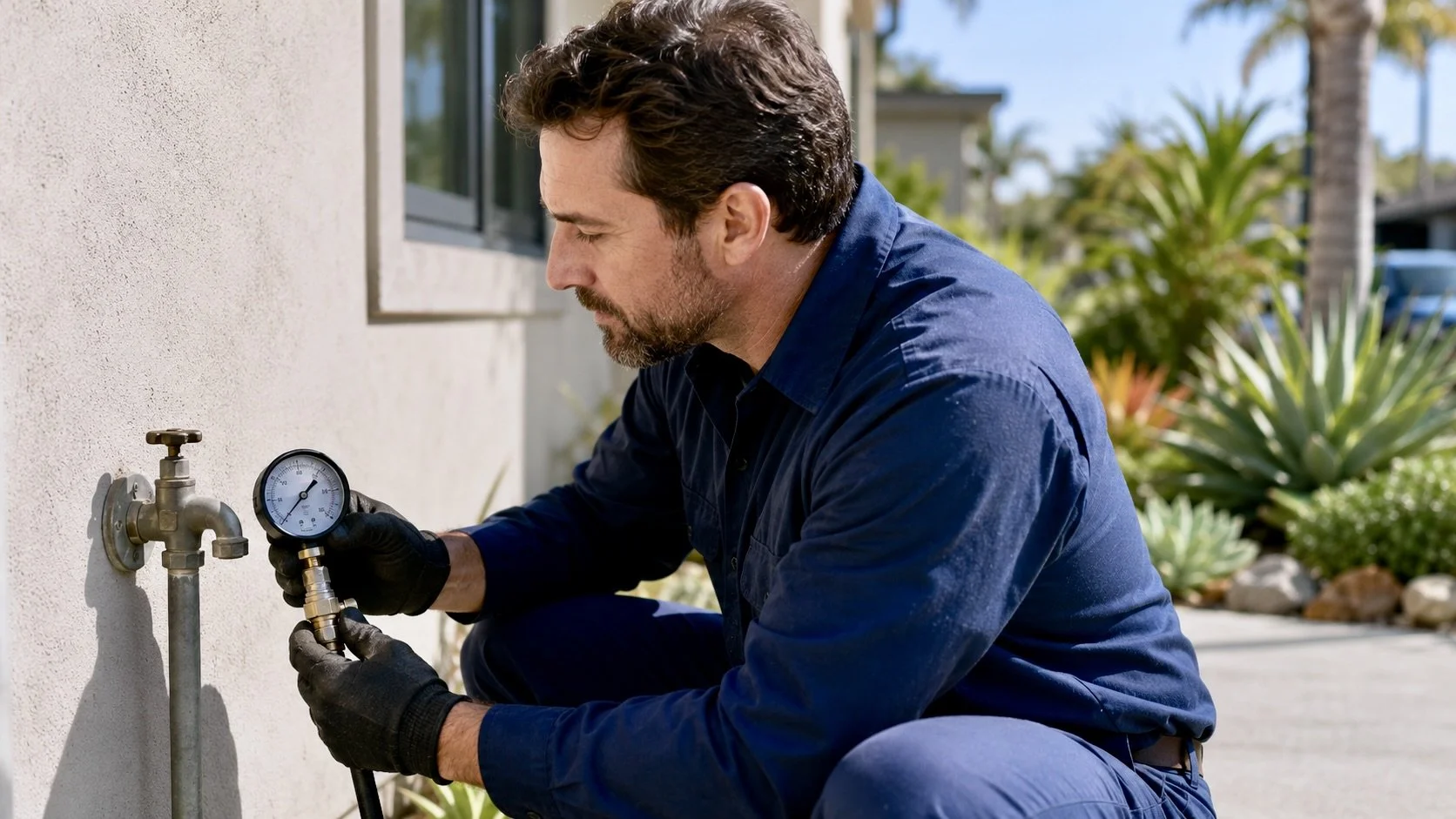
You do not need a plumber for a first reading. A simple water pressure gauge from a hardware store screws onto an outdoor hose bib. With no water running anywhere in the house or yard, turn the spigot on fully and read the dial. If the number lands above 80 psi, your home is over the line plumbing codes treat as the maximum, and it is time to act. Even a reading in the high 70s is worth watching, since municipal pressure can spike higher at certain times of day.
The Fix: Pressure Reducing Valves and Smart Monitoring
The standard solution for high incoming pressure is a pressure reducing valve, or PRV, installed on your main water line. It steps pressure down to a safe, steady level before it reaches the rest of your plumbing. If your home does not have one and your pressure is high, adding a PRV is one of the highest-value plumbing investments you can make. If you already have one, it can wear out over time and may need adjustment or replacement, which is easy to overlook.
It also helps to have something watching the system for you. A Moen Flo smart water monitor tracks pressure and flow at the main line and can alert you to abnormal readings or shut the water off automatically if it detects a leak. Paired with professional leak detection and repair when something does slip through, it gives you a real defense against the slow damage high pressure causes.
Water Pressure FAQs
-
For most homes, normal water pressure falls between 40 and 80 psi, with around 60 psi being ideal. That range delivers strong flow at every fixture without straining your pipes, water heater, or appliances. Anything above 80 psi is considered too high and can cause damage over time.
-
Common signs include banging or knocking pipes when you shut off water, faucets that drip, toilets that keep running, appliances and fixtures that fail earlier than expected, and water bills that climb without a change in usage. The only way to know for sure is to test it with a pressure gauge on an outdoor hose bib.
-
Yes. High pressure adds constant stress to your pipes, including the lines running under a concrete slab foundation. Over time that stress can weaken a pipe to the point of failure, which is one of the more expensive leaks to locate and repair in San Diego homes built on slabs.
-
If your home's incoming pressure is above 80 psi, most plumbing codes call for a pressure reducing valve, and installing one is one of the best ways to protect your plumbing. If you already have a PRV, it can wear out over time, so it is worth having it checked if you are seeing signs of high pressure.
Protect Your San Diego Home Before Summer Hits
Summer puts the most demand on your plumbing all year, between daily irrigation, garden hoses, and houseguests. It is the worst time for a pressure problem to surface as a burst line or a failed water heater. A quick pressure check now, and a PRV if your numbers are high, can save you from an expensive repair when you least want one.